Can My Kitchen Cabinets Be Painted? How to Tell Before You Replace Them
Last Updated: September 14, 2026
If your kitchen cabinets are looking like they're ready for a replacement, good news. They may not need to be replaced. But then again, they might indeed need to be replaced. Which makes the most important question for you: how do you know which one to do?
In many cases, yes. Structurally sound kitchen cabinets can often be professionally painted… but the material, existing finish, damage, and overall condition of the cabinet boxes all help determine whether painting is actually worthwhile. So, before you start tearing cabinets off the walls (or picking out the perfect shade of white), let's take a closer look at how you can assess your own cabinets and get a better idea of what they need.
What Types of Kitchen Cabinets Can Be Painted?
Many types of cabinets can accept a professional painted finish. That doesn't mean they all get the same preparation, though, or that they'll all look exactly the same when they're finished. Knowing what your cabinets are made from is step one.
Oak and Solid Wood Cabinets
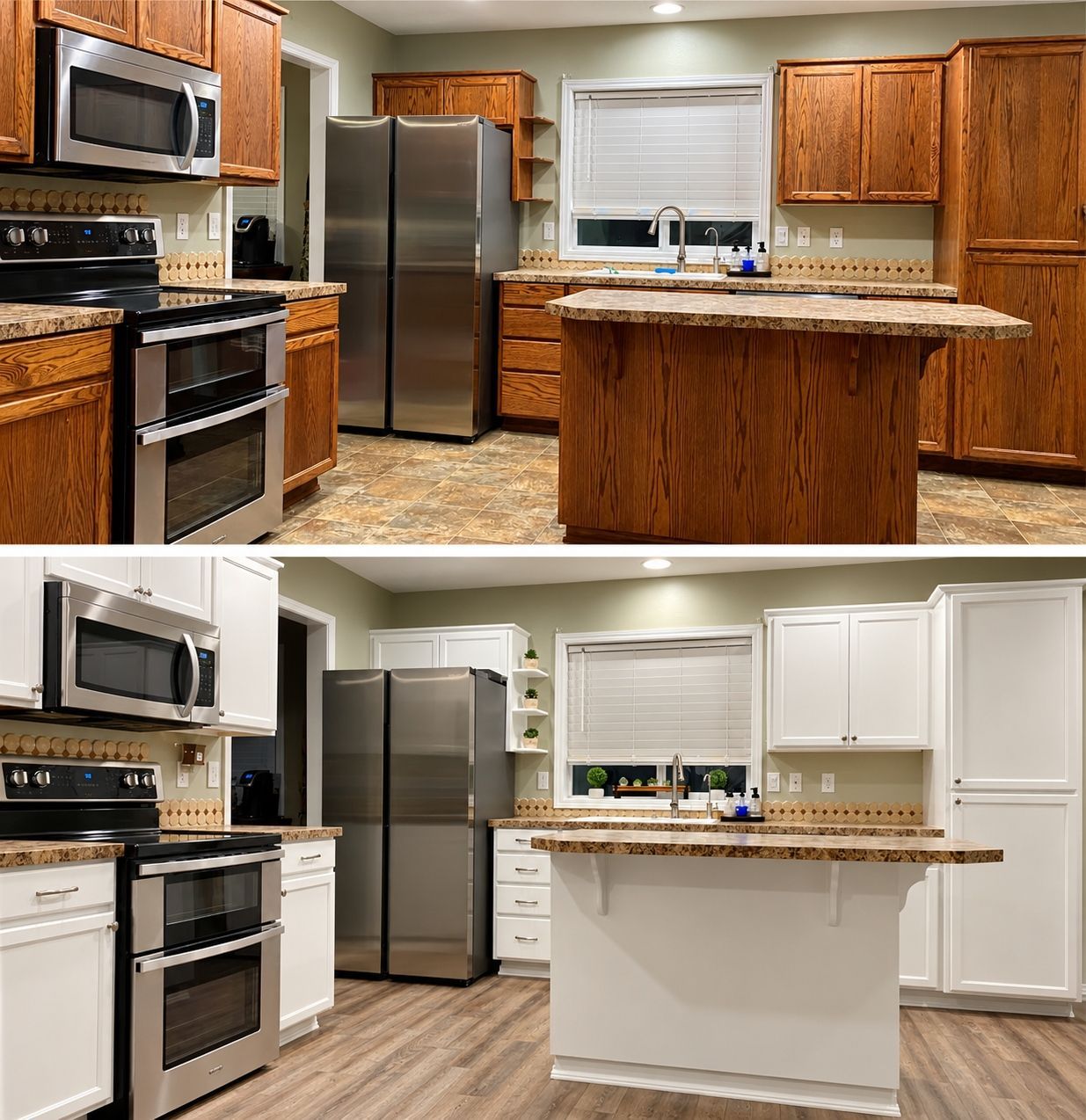
Solid wood cabinets are often excellent candidates for painting, assuming they're still structurally sound. Wood can be cleaned, sanded, primed, and coated to create a durable finish that completely changes the feel of a kitchen. But oak deserves a special mention because it has a pronounced natural grain. Painting changes the color, but it doesn't necessarily erase that texture. Without additional grain-filling work, some of the grain may remain visible through the finished coating. And that's not necessarily a bad thing. Some homeowners actually like the subtle texture because the cabinets still look and feel like painted wood rather than a perfectly smooth manufactured surface. Just something to keep in mind.
MDF Cabinets
Quality MDF cabinet components can also be painted successfully when they're in good condition. The bigger concern is moisture. Once MDF has absorbed water and begun to swell, soften, or deteriorate, simply painting over the surface isn't going to undo that damage. Exposed or damaged MDF should be evaluated before deciding whether refinishing makes sense.
Veneer Cabinets
Veneer cabinets can sometimes be painted… and we mean, sometimes. The veneer NEEDS to be firmly bonded to the material underneath, with no signs of peeling off anytime soon. If it's lifting, bubbling, cracking, or separating, there's more going on than an outdated finish. Depending on the extent of the damage, those areas may need to be repaired or replaced before painting can even be considered.
Laminate and Thermofoil Cabinets
This is where things can get a little trickier. Laminate and thermofoil cabinets have slick factory surfaces that can make proper adhesion more challenging. Some can be successfully refinished with the right preparation and products, but they need to be evaluated carefully. Peeling thermofoil, widespread delamination, or a generally failing surface can make replacement or another remodeling solution a better long-term investment.
Previously Painted Cabinets
Already painted? That doesn't necessarily mean you're stuck with whatever color the last homeowner loved in 2007. Previously painted cabinets can often be repainted when the existing coating is still firmly bonded to the surface. If the old paint is extensively peeling, failing, or was applied without proper preparation, considerably more work may be required before a durable new finish can be applied.
Will Wood Grain Still Show After Painting?
Possibly, especially if you have oak cabinets. Professional cabinet painting can dramatically change the color and overall appearance of natural wood cabinets, but paint alone doesn't automatically eliminate the wood's natural texture. Deep grain can still be somewhat visible beneath the new finish.
Additional grain-filling and preparation can create a smoother appearance, but there's still an important distinction between painted wood and a completely smooth, factory-style cabinet surface. In the end, neither is inherently better. They're just different looks.
Cosmetic Problems Usually Do Not Mean You Need New Cabinets
Here's the good news: ugly doesn't mean broken. Outdated stain colors, faded finishes, scratches, minor surface wear, and a cabinet color you simply can't stand anymore are primarily cosmetic issues. If the cabinets themselves are still solid and functional, those problems don't necessarily justify tearing everything out.
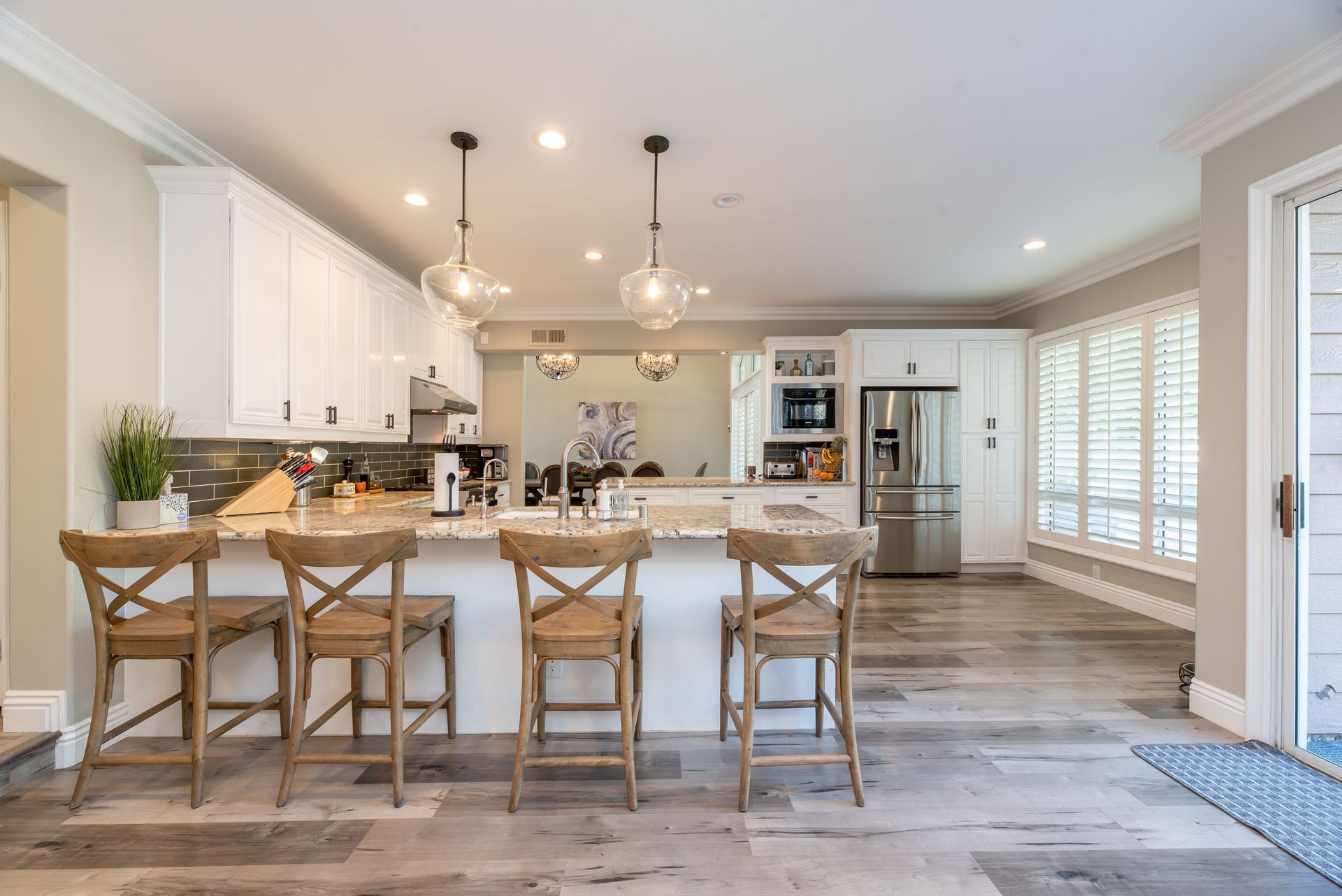
This is where professional cabinet painting can offer a lot of value. You can substantially change the look of the kitchen while keeping cabinet boxes, doors, and a layout that are already working well. If you're happy with where everything is and your biggest complaint is essentially, "I really don't want to look at these cabinets anymore," painting may be worth exploring.
When Cabinet Damage Changes the Recommendation
Cabinet painting should improve cabinetry that's still worth keeping. It shouldn't be used to disguise structural problems underneath a nice new finish. Some damage can be repaired before painting. Other problems are a sign that it's time to think seriously about replacement. Like…
Water Damage
Water and cabinetry aren't exactly best friends. Swelling, softness, deterioration, staining from recurring leaks, or material that's beginning to break down should all be investigated before painting. The source of the moisture also needs to be addressed so the same problem doesn't continue underneath the new finish.
Warped Doors
Paint can change a cabinet door's color. Unfortunately, it can't convince a warped door to become straight again. Doors that no longer sit flat, close correctly, or maintain their shape may need to be replaced rather than refinished.
Failing Cabinet Boxes
Loose joints, sagging shelves or panels, deteriorated materials, and cabinets beginning to pull away from the wall are structural issues, not paint problems.
Should You Paint or Replace Your Kitchen Cabinets?
The decision usually comes down to two questions: Are the cabinets still in good condition, and do they still work for your kitchen? Painting is often worth considering when the cabinet boxes are structurally sound, you're satisfied with the current layout and storage, and your biggest problem is how the cabinets look. Replacement starts making more sense when the cabinets are structurally failing, there's widespread moisture or material damage, you need significantly different storage, or you want to change the kitchen layout itself.
For example, beautifully painted cabinets won't solve the problem if what you really want is an island, more drawers, different appliance locations, or an entirely new kitchen configuration.
Because Fitzpatrick Painting & Construction handles both painting and remodeling work, we're able to look at the bigger picture. Sometimes the right recommendation is professional cabinet painting. Other times, putting that money toward new cabinetry makes more sense. The goal isn't to paint cabinets simply because they can be painted. It's to determine whether they should be.
Why an In-Person Cabinet Evaluation Matters
Photos can tell us quite a bit about your cabinets, but they can't tell the whole story. Seeing the cabinets in person makes it easier to identify the material, inspect the existing finish, check adhesion, spot moisture damage, evaluate previous coatings, and assess the condition of the doors and cabinet boxes. It also gives us a better idea of the preparation the project would require and what you can realistically expect from the finished product.
That's especially important with cabinet painting because the preparation process can vary significantly from one kitchen to another. The right process for solid oak cabinets isn't necessarily the right process for MDF, veneer, laminate, or previously painted cabinets.
Find Out If Your Cabinets Are Worth Painting
If you're trying to decide whether to paint or replace your kitchen cabinets, you shouldn't have to make the call based on a few internet photos and crossed fingers.
Fitzpatrick Painting & Construction can evaluate your existing cabinetry, explain what would be involved in professionally painting it, and of course, help you determine whether refinishing or replacement provides the better long-term value for your home.
If painting makes sense, we'll tell you what it'll take. And if your cabinets really aren't good candidates for painting, we'll tell you that too. Request an estimate and let us take a look at your cabinets before you start planning the next step!